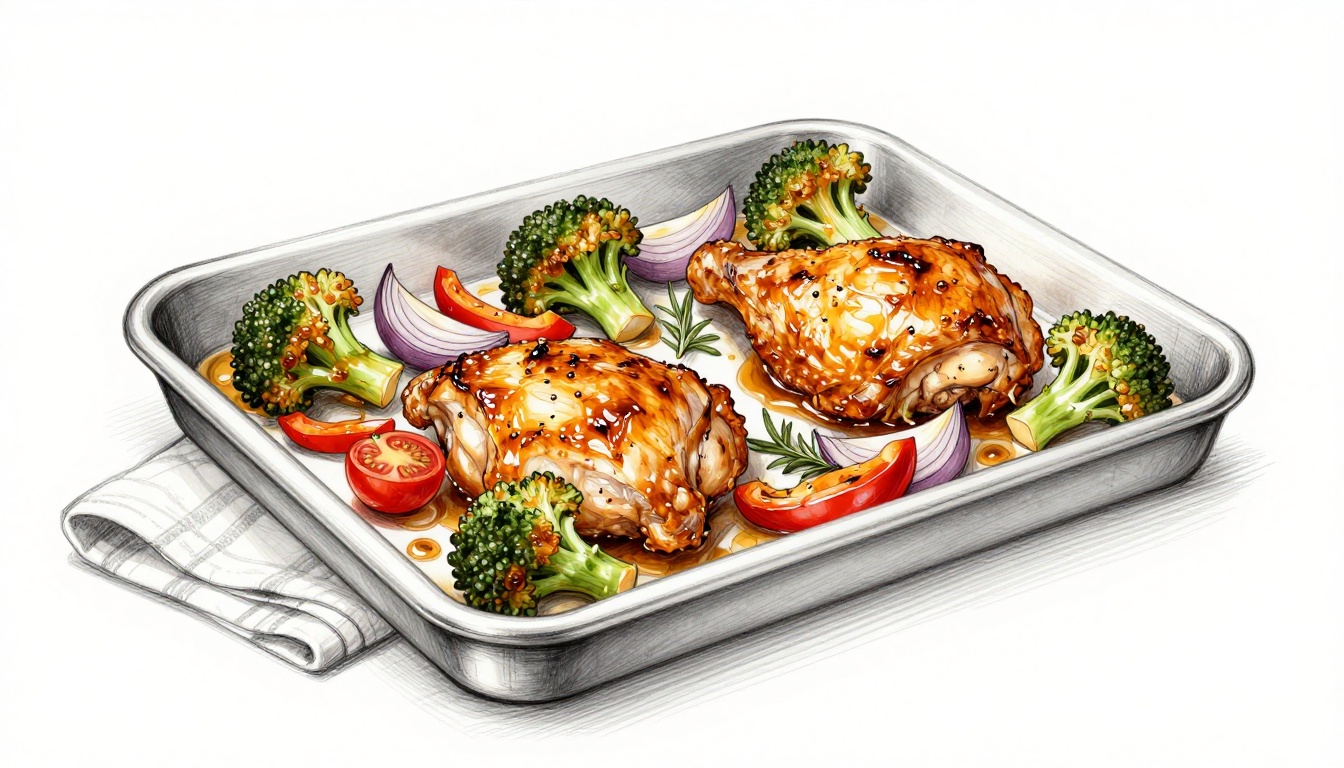
A sheet pan chicken and vegetables dinner makes weeknight cooking easier, with tender chicken, caramelized vegetables, and only one pan to clean. You can use the vegetables you have on hand and adjust the seasoning to suit your taste.
The method is simple: cut the ingredients into similar-sized pieces, coat them with oil and seasonings, then roast everything in a hot oven. Give the ingredients enough space on the pan, and they will brown instead of steam.
The Basics of Sheet Pan Chicken and Vegetables
Choose chicken and vegetables that can cook at a similar rate. Boneless, skinless chicken breasts or thighs are convenient options, while bone-in, skin-on pieces need more time in the oven.
Broccoli, bell peppers, red onion, zucchini, yellow squash, asparagus, carrots, potatoes, and cherry tomatoes all work well. Cut the vegetables into even pieces so they cook consistently. Dense vegetables, such as potatoes and carrots, should be cut smaller than softer vegetables. You can also parboil larger potato pieces for a few minutes before roasting.
Cherry tomatoes and other quick-cooking vegetables are best added near the end. This keeps them tender without letting them turn mushy.
Seasoning Ideas
A basic blend of olive oil, salt, black pepper, garlic powder, and dried oregano or thyme gives the chicken and vegetables a savory flavor. Toss everything well so the seasoning coats each piece.
For a Mediterranean-style dinner, add smoked paprika, cumin, and lemon juice. For an Asian-inspired version, use soy sauce, ginger, and sesame oil. You can also try chili powder and cumin for a Southwest flavor, or rosemary and thyme for a classic herb-roasted meal.
How to Make Sheet Pan Chicken and Vegetables
- Heat the oven. Set the oven to 400°F to 425°F (200°C to 220°C). Line a sheet pan with parchment paper or foil to make cleanup easier.
- Prepare the chicken. Pat the chicken dry with paper towels, since a dry surface helps it brown. Cut large pieces into more even portions, then toss them with about half of the oil and seasoning.
- Prepare the vegetables. Cut the vegetables into similar-sized pieces and toss them with the remaining oil and seasoning. You can use the same bowl as the chicken.
- Arrange everything on the pan. Spread the chicken and vegetables in a single layer, leaving space between the pieces. If the pan looks crowded, use two pans. Crowded ingredients release moisture and steam instead of roasting.
- Roast until cooked through. Boneless chicken and most vegetables usually take 20 to 30 minutes. Turn the chicken and stir the vegetables halfway through so they brown more evenly. Add quick-cooking vegetables, such as cherry tomatoes, during the last 5 to 10 minutes.
- Check the chicken. Use a meat thermometer to confirm that the thickest part has reached 165°F (74°C). For more information about safe cooking temperatures, see Wikipedia’s Food Safety page.
- Rest before serving. Let the chicken rest for a few minutes after removing the pan from the oven. This gives the juices time to settle and keeps the meat tender.
Flavor Variations and Helpful Tips
A few small changes can give this sheet pan chicken and vegetables dinner a different flavor each time.
- Mediterranean: Roast chicken thighs with bell peppers, zucchini, red onion, and cherry tomatoes. Use olive oil, oregano, garlic, and red pepper flakes, then finish with lemon juice and parsley.
- Asian-inspired: Toss the chicken with soy sauce, honey, ginger, and garlic. Add broccoli, carrots, and snap peas, then sprinkle sesame seeds over the finished dish.
- Southwest: Season the chicken with chili powder, cumin, and paprika. Add bell peppers, red onion, and corn, then finish with cilantro and lime juice.
- Herb roasted: Pair chicken with potatoes, carrots, and Brussels sprouts. Season with olive oil, garlic, rosemary, and thyme.
For the best results, keep these simple points in mind:
- Leave room on the pan. Use two pans if needed so the ingredients roast instead of steam.
- Keep the oven hot. Temperatures between 400°F and 425°F help the chicken brown and the vegetables caramelize.
- Add delicate vegetables near the end. Cherry tomatoes and spinach need less time than potatoes or carrots.
- Marinate the chicken ahead. Even 30 minutes can add extra flavor. If you have more time, marinate it for a few hours.
- Make extra for later. A larger batch can provide ready-to-reheat lunches or dinners for the next few days.
Frequently Asked Questions
Can I use frozen vegetables?
Yes. Frozen vegetables can release more moisture, so spread them out in a single layer and leave extra space on the pan. They may need a little more roasting time to brown.
How can I keep the chicken from drying out?
Pat the chicken dry, coat it with oil and seasoning, and avoid cooking it past 165°F (74°C). A meat thermometer helps you check doneness without guessing. Chicken thighs are also a good option because they contain more fat than chicken breasts.
Which potatoes work best?
Baby potatoes and fingerlings are convenient choices. Cut larger potatoes, such as Yukon Gold or Russet, into roughly 1-inch pieces. If they are especially large or dense, parboil them for 5 to 7 minutes before adding them to the pan.
Can I add sauce?
Yes. Drizzle sauce over the cooked meal before serving, or brush the chicken with barbecue or teriyaki sauce during the last 10 minutes of roasting. Avoid adding a lot of liquid at the beginning, since it can keep the ingredients from browning.
How should I store leftovers?
Let the food cool, then transfer it to an airtight container and refrigerate for 3 to 4 days. Reheat the chicken and vegetables in the microwave or oven until hot.

Food writer and passionate home cook dedicated to creating easy, delicious recipes, quick weeknight meal ideas, and practical kitchen tips. Focused on helping everyday cooks recreate wholesome, flavorful dishes at home with simple ingredients and clear, step-by-step guides.