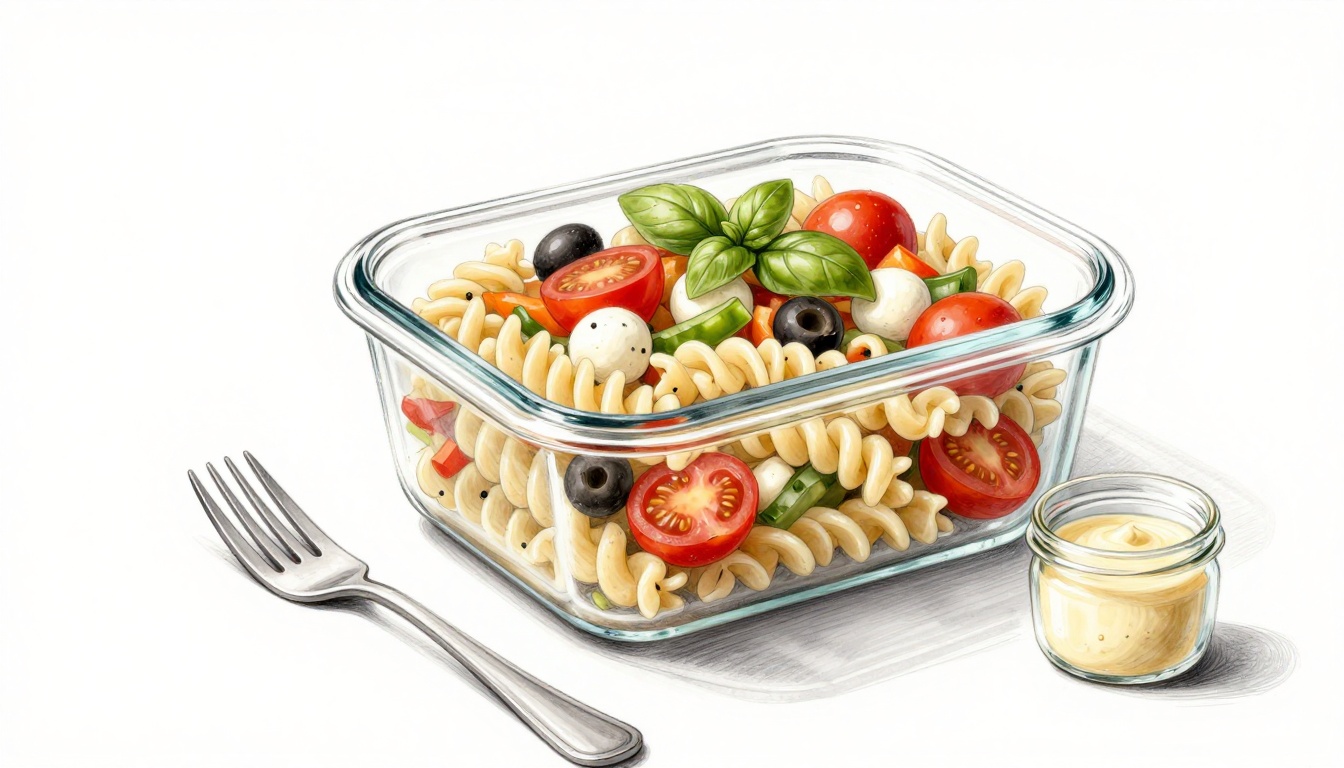
A bowl of cold Italian pasta salad in the fridge makes lunch simple. You can pack a portion, grab a fork, and get on with your day without cooking or reaching for takeout.
This recipe combines short pasta, crisp vegetables, mozzarella, olives, herbs, and a bright homemade dressing. Each ingredient adds something different, so the salad stays filling and full of flavor. Italian-style pasta salads often pair pasta with vegetables, olives, cheese, herbs, and an oil-based dressing, making them a natural fit for make-ahead meals. (Foodbites)
Pasta gives the salad a hearty base, while the vegetables add crunch and freshness. Mozzarella brings a creamy bite, olives add saltiness, and red wine vinegar and herbs brighten the whole bowl. Add chicken, chickpeas, or tuna if you want a more filling lunch.
The key is cooking the pasta until it is firm and keeping some dressing aside. That way, the salad holds its texture in the fridge and tastes fresh when you serve it.
Ingredients
This recipe makes about 6 meal-prep servings.
- 500 grams short pasta, such as fusilli, rotini, penne, farfalle, or gemelli
- 250 grams cherry tomatoes, halved or quartered
- 1 cucumber, diced
- 1 small red bell pepper, diced
- 1/2 red onion, finely chopped
- 150 grams mozzarella pearls or cubed mozzarella
- 100 grams pitted olives, halved
- 150 grams salami, cut into small pieces, optional
- A handful of fresh basil or parsley
For the dressing:
- 60 ml extra-virgin olive oil
- 30 ml red wine vinegar
- 1 tablespoon lemon juice
- 1 teaspoon Dijon mustard
- 1 small garlic clove, minced
- 1 teaspoon dried oregano
- 1/2 teaspoon salt
- Freshly ground black pepper
- 1/2 teaspoon honey or maple syrup, optional
Choosing the Pasta and Vegetables
Short pasta with ridges or curves catches the dressing and small pieces of vegetables. Fusilli and rotini work especially well, but penne, farfalle, and gemelli are also good options. Choose a shape you already have in the pantry.
Use vegetables with different colors and textures. Cherry tomatoes add juicy sweetness, cucumber gives the salad a cool crunch, and bell pepper adds crispness. Red onion brings a sharper flavor. If raw onion tastes too strong, soak it in cold water for a few minutes, then drain it well.
You can also add roasted red peppers, artichoke hearts, pepperoncini, spinach, or arugula. Dry washed vegetables before adding them, since extra water can thin the dressing.
Flavorful Add-Ins
Mozzarella and olives bring creamy and briny flavors, while salami makes the salad more savory. Fresh basil adds a bright, fragrant finish. Parmesan, sun-dried tomatoes, pepperoncini, and artichoke hearts also work well. Italian pasta salad recipes vary widely, with ingredients such as tuna, mozzarella, olives, tomatoes, and basil all appearing in different combinations. (Pina Bresciani)
For a vegetarian version, leave out the salami and add chickpeas, white beans, or extra vegetables. Grilled chicken or canned tuna makes a heartier meal. If you add meat or seafood, keep the salad properly chilled.
Homemade Italian Dressing
A homemade vinaigrette takes only a few minutes and lets you adjust the flavor to your liking. Add the olive oil, red wine vinegar, lemon juice, Dijon, garlic, oregano, salt, and pepper to a jar. Close the lid and shake until the dressing looks lightly thickened.
Taste it before pouring it over the salad. Add a little honey or maple syrup if it tastes too sharp, or another splash of vinegar if it needs more brightness. Cold foods can taste less seasoned, so the dressing should have a lively flavor on its own.
How to Make Cold Italian Pasta Salad
- Cook the pasta. Bring a large pot of well-salted water to a boil. Cook the pasta according to the package directions, stopping when it is al dente, or pleasantly firm. Taste a piece near the end of the cooking time since pasta shapes and brands can vary.
- Cool it promptly. Drain the pasta and rinse it under cold running water until it has cooled. Let it drain well so excess water does not dilute the dressing. Cooking pasta al dente and cooling it after draining are common steps in Italian pasta salad recipes. (NatashasKitchen.com)
- Prepare the remaining ingredients. Halve or quarter the tomatoes, dice the cucumber and bell pepper, and finely chop the onion. Cut the mozzarella and salami into bite-size pieces, then halve the olives. Tear the basil by hand or chop the parsley.
- Mix the salad. Add the cooled pasta, vegetables, mozzarella, olives, salami, and herbs to a large bowl. Shake the dressing again, then pour most of it over the salad. Toss gently until everything is coated.
- Taste and portion. Add more salt, pepper, herbs, or dressing as needed. Divide the salad among six airtight containers. Set aside a little dressing if you want to refresh the portions before serving.
Keep the Pasta Firm
Al dente pasta holds up better as it chills and absorbs some of the dressing. If the noodles are already soft when they leave the pot, refrigeration can make them mushy. Start tasting the pasta a minute or two before the package time is up.
Drain and cool the pasta as soon as it is ready. Leaving it in the hot pot allows it to keep cooking. If you are not assembling the salad right away, toss the cooled pasta with a small amount of olive oil to help prevent clumping.
Meal Prep and Storage Tips
Refrigerate the salad promptly in covered containers. Keep it at 40°F (4.4°C) or below, as USDA guidance recommends for chilled foods. (FSIS)
For the best texture, plan to eat this version within about three days, especially if it contains mozzarella, salami, chicken, or tuna. Keep the containers cold until you are ready to eat. If you pack lunch for work or school, use an insulated lunch bag with cold packs. USDA recommends using at least two cold sources when packing perishable food in an insulated lunch bag. (FSIS)
Pasta absorbs dressing as it sits, so the salad may taste drier on the second or third day. Reserve a little vinaigrette and toss it through a serving just before eating. A small splash of olive oil and vinegar also freshens the flavor.
Use individual airtight containers that hold about 2 to 3 cups for convenient lunch portions. Packing separate servings means you can take only what you need and keep the rest chilled.
Easy Variations
This cold Italian pasta salad is easy to adjust to your preferences:
- For a vegetarian salad, leave out the salami and add chickpeas, white beans, artichoke hearts, or extra mozzarella.
- For more protein, add grilled chicken, tuna, chickpeas, or pasta made with chickpeas or lentils. These pasta options can also add fiber or protein. (Easy Eats Dietitian)
- For a lighter, vegetable-forward salad, use a little less pasta and add more cucumber, bell pepper, tomatoes, spinach, or arugula. (The Mediterranean Dish)
- For a gluten-free version, use your preferred gluten-free short pasta and check the labels on packaged ingredients such as salami and mustard.
- For extra flavor, add chili flakes, roasted red peppers, pepperoncini, sun-dried tomatoes, or grated Parmesan.
A squeeze of lemon can brighten the salad after it has been in the fridge. Add it a little at a time and taste as you go.
Conclusion
Cold Italian pasta salad makes a satisfying lunch that is easy to prepare ahead and simple to customize. Cook the pasta until firm, cool it quickly, and toss it with crisp vegetables, mozzarella, olives, herbs, and homemade vinaigrette. Save a little dressing for later, then portion the salad into airtight containers and keep them chilled.
Use salami, chickpeas, chicken, or extra vegetables to suit the kind of lunch you want. Once the basic method is familiar, you can make a fresh batch with whatever pasta and ingredients you have on hand.
FAQs
Can I make Italian pasta salad the night before?
Yes. Making it a few hours ahead gives the flavors time to come together. For the freshest texture, reserve some dressing and add it just before serving. Refrigerate the salad promptly.
What pasta works best for cold Italian pasta salad?
Fusilli, rotini, penne, farfalle, and gemelli are all good choices. Their shapes hold dressing and small pieces of vegetables well.
How long does homemade Italian pasta salad last in the fridge?
For the best quality, eat this version within about three days, especially if it contains cheese, salami, chicken, or seafood. Store it in an airtight container in a refrigerator kept at 40°F (4.4°C) or below. (Pina Bresciani)
Can I make Italian pasta salad without meat?
Yes. Omit the salami and add chickpeas, white beans, extra mozzarella, artichoke hearts, or more vegetables. Chickpea or lentil pasta is another option if you want to add protein and fiber. (Easy Eats Dietitian)
Why does pasta salad dry out in the fridge?
Pasta absorbs some of the dressing as it rests. Save a little vinaigrette and toss it with each portion before serving, or add a small splash of olive oil and vinegar.

Food writer and passionate home cook dedicated to creating easy, delicious recipes, quick weeknight meal ideas, and practical kitchen tips. Focused on helping everyday cooks recreate wholesome, flavorful dishes at home with simple ingredients and clear, step-by-step guides.