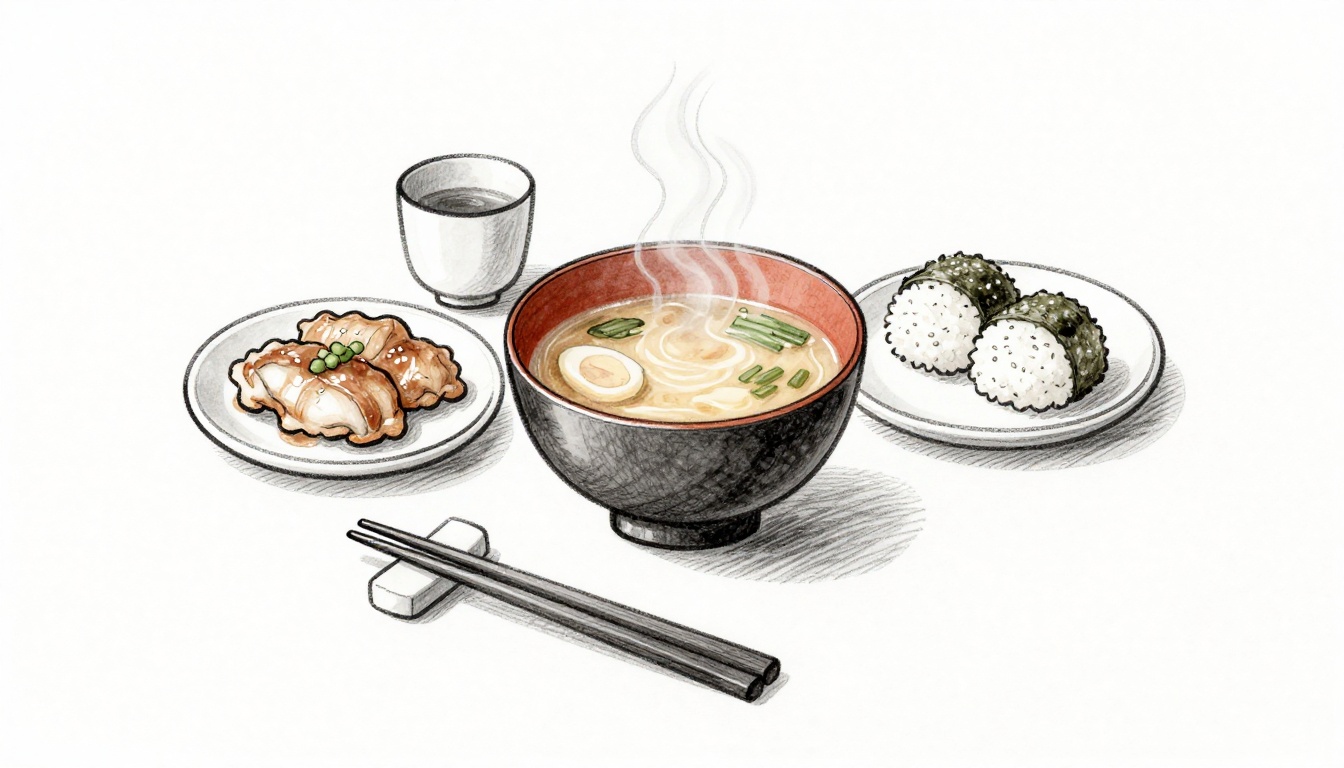
Japanese home cooking, or katei ryori, is comforting, practical, and easy to learn. It relies on simple techniques, fresh ingredients, and balanced flavors rather than complicated presentation.
A warm bowl of miso soup, tender chicken teriyaki, or a few homemade rice balls can make an everyday meal feel special. These beginner-friendly Japanese recipes will help you get comfortable in the kitchen, one dish at a time.
Why Japanese Home Cooking Works for Beginners
Japanese home cooking often uses everyday ingredients and straightforward methods. Many dishes come together in about 30 minutes, and you can make them with basic kitchen equipment.
A small pantry of staples, including soy sauce, mirin, sake, miso, and dashi, gives you a foundation for many meals. Once you have these ingredients on hand, it becomes easier to season soups, sauces, and marinades.
- Simple cooking methods like simmering, grilling, and steaming are easy to practice.
- A typical meal pairs rice and soup with a main dish and vegetables.
- Flexible seasoning lets you adjust the flavors to your taste.
Japanese home cooking also encourages you to pay attention to each ingredient. Taste as you cook, then add a little more seasoning if the dish needs it.
Essential Pantry Items
Start with a few versatile ingredients that appear in many Japanese recipes. Most keep well, so you can use them across several meals.
- Soy sauce (shoyu) adds a savory, salty base to sauces and soups.
- Mirin is a sweet rice wine that adds depth and a glossy finish.
- Sake is used in cooking to add flavor and soften strong odors.
- Miso paste is fermented soybean paste used in soups, marinades, and dressings.
- Dashi is a Japanese stock commonly made with kombu and bonito flakes.
- Rice vinegar adds gentle acidity to dressings and sushi rice.
You can find these ingredients at many supermarkets and Asian grocery stores. Instant dashi powder is a convenient option if you cannot find prepared dashi.
Recipe 1: Classic Miso Soup
This warm, savory soup is a simple addition to a Japanese meal. Once you know the basic method, you can adjust the ingredients to your taste.
Ingredients
- 2 cups dashi
- 2 tablespoons miso paste
- 1/4 block soft tofu, cut into cubes
- 1 tablespoon dried wakame
- 1 green onion, thinly sliced
Instructions
- Heat the dashi in a pot over medium heat until it reaches a gentle simmer.
- Add the tofu and wakame, then cook for about 2 minutes.
- Ladle a small amount of hot dashi into a bowl and whisk in the miso until smooth.
- Stir the miso mixture back into the pot, then turn off the heat.
- Top with green onion and serve hot.
Avoid boiling the soup after you add the miso. High heat can dull its delicate flavor.
Recipe 2: Chicken Teriyaki
Chicken teriyaki is known for its savory-sweet sauce and glossy finish. The word teri refers to the sauce’s shine, while yaki means grilled or cooked.
Ingredients
- 2 boneless, skinless chicken thighs
- 3 tablespoons soy sauce
- 2 tablespoons mirin
- 1 tablespoon sake
- 1 tablespoon sugar
- 1 teaspoon grated ginger
Instructions
- Stir the soy sauce, mirin, sake, sugar, and ginger together in a small bowl.
- Heat a pan over medium heat and place the chicken thighs in the pan, smooth side down.
- Cook for about 5 minutes, until golden, then flip and cook for another 4 minutes.
- Pour in the sauce and simmer until it thickens into a glaze.
- Turn the chicken in the sauce to coat it, then slice and serve over steamed rice.
The sauce should coat the chicken with a light, glossy layer. If it thickens too much, stir in a splash of water.
Recipe 3: Onigiri Rice Balls
Onigiri are portable Japanese rice balls often filled with salmon, tuna, or pickled plum. Tuna mixed with mayonnaise makes an easy filling for a first batch.
Ingredients
- 2 cups cooked Japanese short-grain rice
- Salt
- 1 can tuna mixed with 1 tablespoon mayonnaise
- Nori sheets
Instructions
- Wet your hands and rub a pinch of salt across your palms.
- Place a scoop of rice in one hand and make a small indentation in the center.
- Add about 1 teaspoon of tuna filling, then cover it with more rice.
- Gently press the rice between both hands to shape it into a triangle.
- Wrap a strip of nori around the rice ball and serve.
Keep your hands damp to prevent the rice from sticking. Press gently, since packing the rice too firmly can make the onigiri dense.
Recipe 4: Vegetable Tempura
A cold batter and hot oil help give tempura its light, crisp coating. Prepare the batter just before frying, and mix it only until the flour is combined.
Ingredients
- 1 cup all-purpose flour
- 1 cup ice-cold water
- 1 egg
- Sliced vegetables, such as sweet potato, zucchini, mushrooms, and green beans
- Oil for frying
Instructions
- Heat the oil in a deep pan to 350°F (175°C).
- Whisk the egg with the cold water, then add the flour and stir lightly. A few lumps are fine.
- Dip each vegetable slice into the batter.
- Fry in small batches for 2 to 3 minutes, until lightly golden.
- Drain on a rack and serve with tentsuyu dipping sauce.
Avoid overmixing the batter. Too much mixing develops gluten, which can make the coating heavy instead of crisp.
How to Build a Japanese Meal
A traditional Japanese meal often follows the structure ichiju sansai, or one soup and three dishes. You do not have to follow it exactly, but it offers an easy way to plan a balanced plate.
- Steamed rice is the foundation of the meal.
- Miso soup adds warmth and savory flavor.
- A main dish can include fish, chicken, or tofu.
- Side dishes might include pickles, simmered vegetables, or salad.
Start with rice, soup, and one main dish. Add more sides as you get comfortable with the cooking.
Common Beginner Mistakes to Avoid
A few small adjustments can make these recipes easier and more consistent.
- Choosing the wrong rice: Use Japanese short-grain rice for the soft, slightly sticky texture needed for onigiri.
- Boiling miso soup: Stir in the miso after turning off the heat to preserve its delicate flavor.
- Crowding the pan: Cook in batches so ingredients brown instead of steaming.
- Slicing teriyaki chicken too soon: Let the chicken rest briefly before cutting to help keep it juicy.
Pay attention to heat, timing, and seasoning as you cook. Each recipe will feel more familiar with practice.
A Simple Way to Start
Japanese home cooking is built around balance, simple techniques, and care with ingredients. With a few pantry staples, you can make these four dishes for satisfying meals throughout the week.
Begin with miso soup or chicken teriyaki, then try onigiri and vegetable tempura when you feel ready. Choose one recipe, gather the ingredients, and make it tonight.

Food writer and passionate home cook dedicated to creating easy, delicious recipes, quick weeknight meal ideas, and practical kitchen tips. Focused on helping everyday cooks recreate wholesome, flavorful dishes at home with simple ingredients and clear, step-by-step guides.