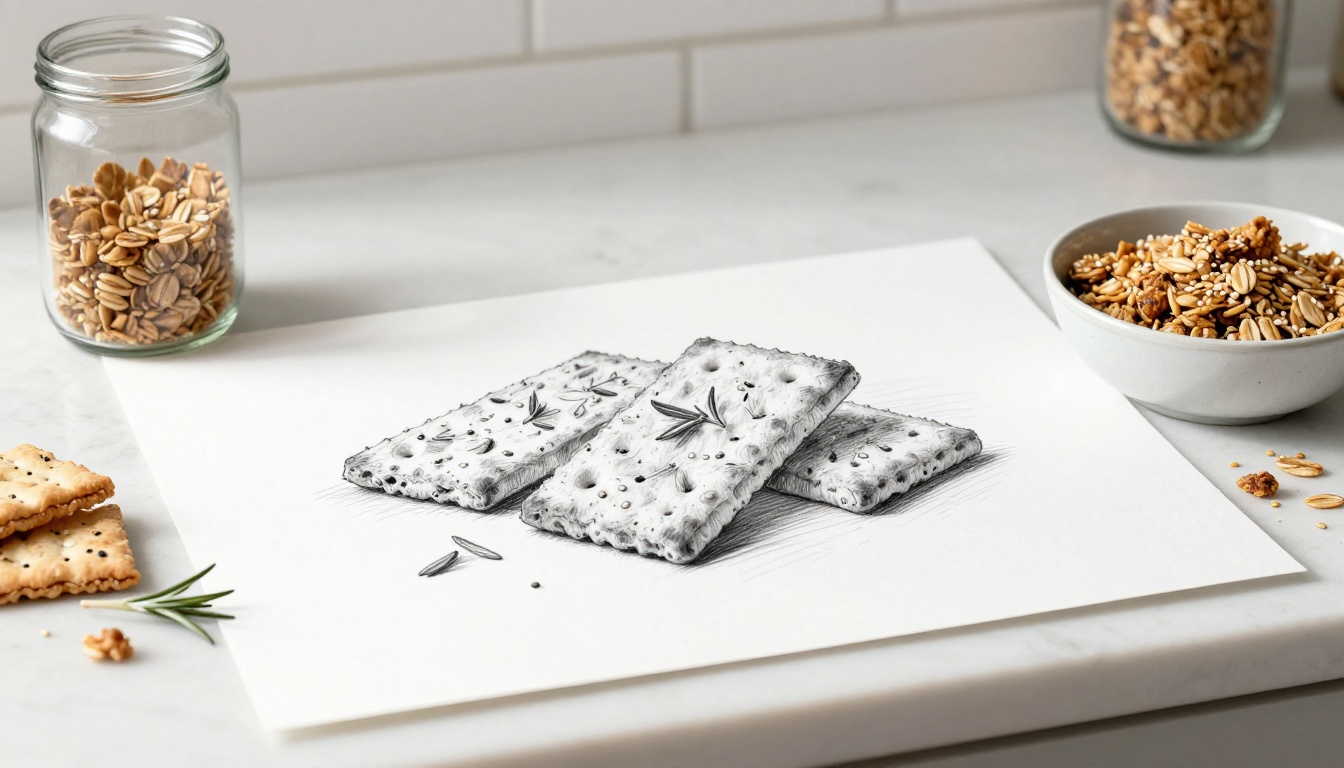
Extra sourdough starter can become crisp crackers or crunchy oat clusters instead of another ingredient poured down the drain. These sourdough discard snack ideas give you a simple way to make something satisfying with ingredients you already have.
Savory herbs, toasted nuts, and a little sweetness offer plenty of variety without a long shopping list. The easiest approach is to choose a reliable recipe, measure your discard, and adjust the flavor without changing the dough’s balance.
Start with the snack you enjoy eating, then build a small routine around it.
Artisan Sourdough Discard Snack Ideas for Mindful Zero-Waste Cooking
Discard contributes flour, water, and fermented flavor, so it deserves a measured place in your recipe. Crackers and granola are useful starting points because neither requires the airy rise you expect from a loaf.
You can keep the ingredients simple while giving each batch a different character.
Bake Savory Crackers With Herbs, Seeds, and Spices
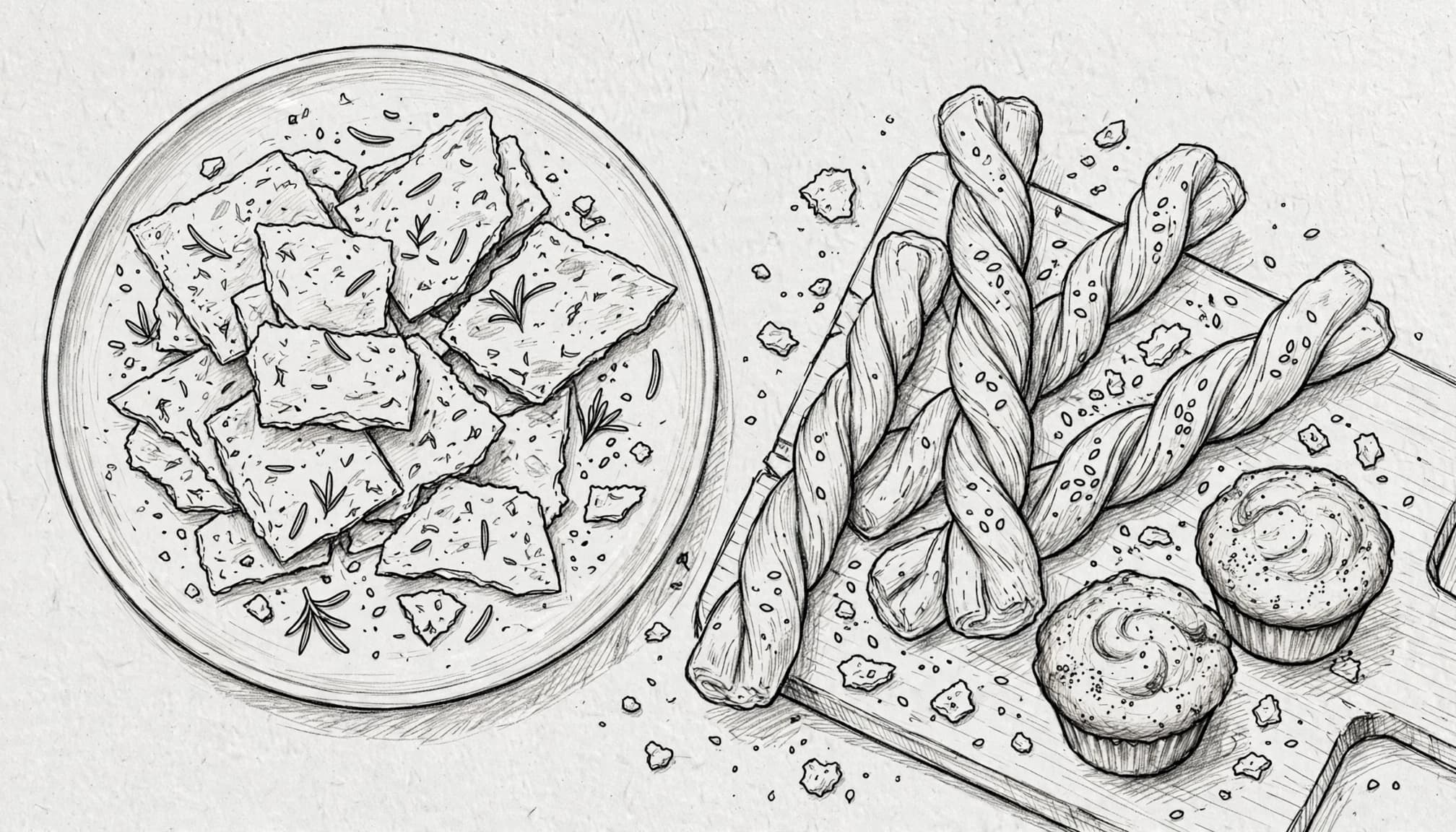
Thin crackers turn a modest amount of discard into a snack with plenty of crunch. King Arthur Baking’s sourdough cracker recipe combines discarded starter with flour, salt, butter, and herbs for a tangy, savory result.
Use that kind of measured recipe as your foundation, then choose one main seasoning. Rosemary and black pepper make a fragrant combination, while sesame seeds bring a gentle toasted flavor.
Roll the dough to an even thickness because thin edges can brown before a thicker center dries. Rolling between parchment sheets makes the dough easier to handle and reduces the temptation to add excessive flour.
Cut pieces to a similar size, and leave a little space between them on the baking sheet. If the outer crackers finish first, remove them while the remaining pieces continue baking.
The goal is a dry, crisp center as well as lightly browned edges. Let a cracker cool before judging its texture, since hot crackers can feel softer than the finished snack.
Keep the first batch lightly seasoned if you plan to serve it with a salty dip. You can always add a stronger topping at the table.
Make Sweet Granola Clusters With Oats and Nuts
Granola gives discard a different role: it helps hold oats and nuts together in crunchy clusters. King Arthur Baking’s sourdough granola uses this approach for a snack described as barely sweetened.
Choose a discard-based granola recipe rather than stirring an arbitrary amount of starter into your usual dry mixture. The added water changes how the oats bake, so the balance matters.
Rolled oats provide a sturdy base, while chopped walnuts, pecans, or pumpkin seeds add variety. Cinnamon works well with these ingredients and gives the finished granola a warm flavor without requiring extra sweetener.
For larger clusters, press the mixture into a compact, even layer before baking. Follow the recipe’s stirring instructions, then allow the granola to cool before breaking it into snack-sized pieces.
Add raisins, chopped dried apricots, or other dried fruit after baking so they don’t become hard or scorched. You can also leave the fruit out and serve the clusters alongside fresh fruit.
Adjust sweetness modestly, since honey and syrups also affect browning and texture. A smaller change gives you a clearer sense of what to adjust next time.
Match the Snack to Your Sourdough Discard
The most useful recipe is one that fits the discard you actually collect. Begin with its weight and the recipe’s requirements, rather than choosing a large batch simply because the jar looks full.
A little preparation makes the mixing easier.
Measure Your Discard and Keep the Recipe Balanced
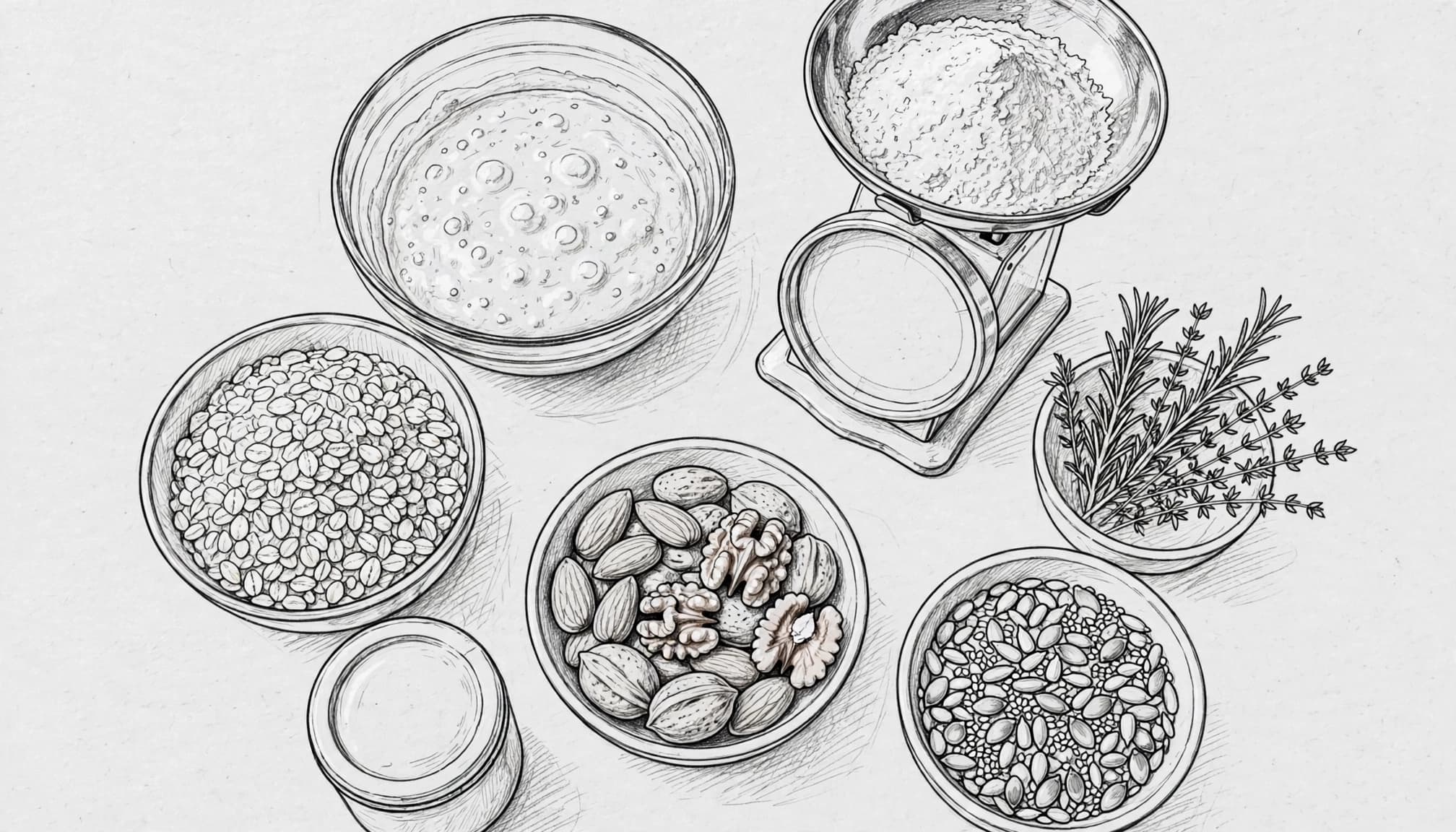
A kitchen scale makes sourdough discard snack ideas easier to repeat because you can measure directly into the mixing bowl. Set the empty bowl on the scale, reset it to zero, and add the amount your recipe requires.
If you have less discard than the recipe calls for, scale all the ingredients together. For a half batch, halve the flour, fat, salt, and seasonings along with the starter.
Keep the crackers themselves the same thickness when reducing the batch. You will need less baking space, but the pieces still need enough time to dry and become crisp.
Read the full ingredient list before mixing, including any description of the starter the recipe expects. Discard contains both flour and water, so adding more affects more than flavor.
For example, 100 grams of starter maintained with equal weights of flour and water contains approximately 50 grams of each. That helps explain why discard cannot replace an equal weight of flour alone.
Choose a recipe that already accounts for the starter, then record any successful changes. King Arthur Baking’s sourdough cracker baking guide offers a useful starting point for making crackers a repeatable use for discard.
Keep your notes short: the amount used, the seasoning, and whether you would roll the next batch thinner. Those details are more useful than a lengthy description.
Know When Discard Is Safe to Use
Use discard collected from an established, well-maintained starter, and keep the collection container clean. Good handling matters throughout the process, as covered in Colorado State University’s starter guidance.
Visible mold, unusual discoloration, or a rotten smell are reasons to throw the discard away. Don’t scrape away a suspicious patch and use the remainder.
University of Minnesota Extension’s sourdough safety guidance advises discarding starter that shows mold or contamination. Baking is not a way to rescue contaminated starter.
Use a clean spoon whenever you remove discard, and avoid returning leftover mixed dough to the storage jar. Once flour, butter, seasonings, or other ingredients have been added, that mixture belongs to the snack recipe.
Keep raw dough and finished snacks separate as you work. A fresh plate or cooling rack prevents the baked food from contacting surfaces that held uncooked dough.
Don’t taste raw cracker dough or uncooked granola mixture containing flour. Judge the seasoning from a fully baked sample instead.
If you are unsure whether a jar has been handled safely, let it go. Reducing waste has a safety limit, and keeping a questionable ingredient creates no useful saving.
Make Zero-Waste Snack Prep Easy to Repeat
A small, dependable batch is more useful than a collection of ambitious recipes you rarely make. Keep one savory option and one lightly sweet option in rotation, then vary the flavors with ingredients already in your kitchen.
This keeps snack preparation manageable.
Use Leftover Ingredients as Toppings and Mix-Ins
Small amounts of fresh herbs can give crackers plenty of flavor. Finely chop tender parsley or cilantro stems along with the leaves, but leave woody rosemary stems out of the dough.
Dry the herbs after washing, since extra surface water makes a measured dough less predictable. Chop them finely enough to distribute evenly without creating thick pockets.
Citrus zest offers another easy variation. Wash the fruit first, then grate only the colored outer peel and avoid the bitter white layer underneath.
Use lemon zest with black pepper for savory crackers, or orange zest with cinnamon in granola. Start with one pairing so the flavors remain clear.
Nuts and seeds are useful when only a small amount remains in the package. Chop larger nuts into similar-sized pieces, and keep the total amount close to what your granola recipe specifies.
If you substitute ingredients, replace similar ingredients rather than continually adding more. Swapping one nut for another usually preserves the mixture more closely than doubling the total quantity.
Serve crackers with hummus, bean dip, or another spread already in the refrigerator. Keep moist toppings separate until serving so the crackers retain their crunch.
Fresh fruit nearing its best can accompany granola rather than going into a mixture designed for dry ingredients. You still use the fruit without changing the baking process.
Store Snacks Thoughtfully and Plan the Next Batch
Allow baked snacks to cool fully before packing them away. Trapped steam can soften a crisp batch, so give crackers and granola enough space for moisture to escape.
Break granola into clusters only after it has cooled, then portion what you expect to eat. Smaller portions make it easier to take out a snack without repeatedly handling the whole batch.
Keep crackers separate from moist foods until serving. Pack a dip in its own container, and add fresh fruit to granola when you are ready to eat.
Label your discard container with the date, and keep collected discard refrigerated between baking sessions. Use a clean container with enough room for the contents rather than filling a jar to its rim.
For starter care, SDSU Extension recommends a loosely covered starter container to help protect against unwanted particles. Keep the container covered without sealing an actively fermenting starter under pressure.
Make a short recipe list organized by the amount of discard each recipe uses. Two dependable choices are enough to make the next decision easier.
Before starting another batch, look at the snacks you already have. Finishing those first is part of mindful zero-waste cooking, too.
If extra snacks regularly accumulate, reduce the batch rather than adding more recipes to the rotation. The right amount is the amount your household enjoys while the texture is appealing.
Start With One Small Batch
Crisp herb crackers and lightly sweet granola clusters give you two flexible ways to use extra starter. A measured recipe keeps the texture dependable, while small changes in herbs, spices, nuts, or zest keep each batch interesting.
Begin with one small batch, then note the seasoning and texture you prefer. Keep only sound ingredients, use what you already have, and let the next batch fit your kitchen rather than the other way around.

Food writer and passionate home cook dedicated to creating easy, delicious recipes, quick weeknight meal ideas, and practical kitchen tips. Focused on helping everyday cooks recreate wholesome, flavorful dishes at home with simple ingredients and clear, step-by-step guides.