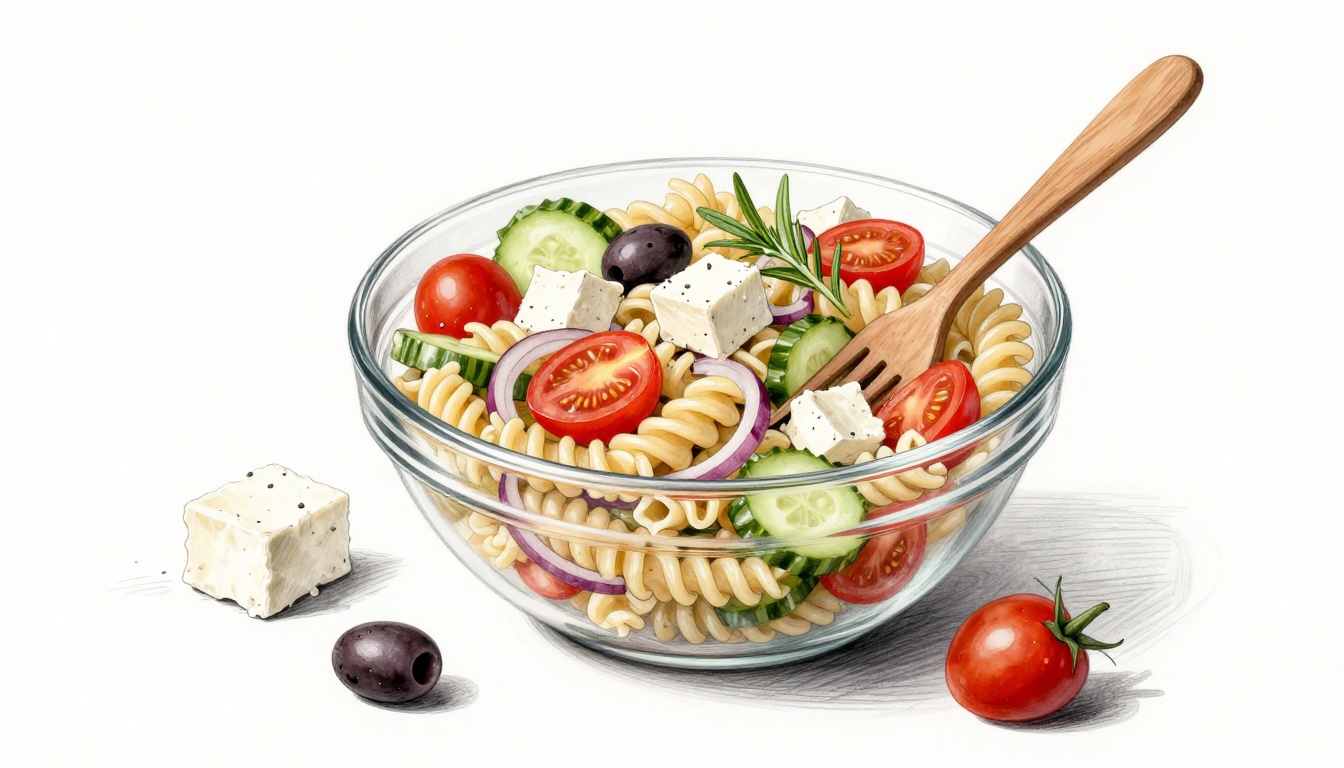
Greek pasta salad with feta brings together crisp vegetables, briny olives, tender pasta, and a bright oregano dressing. It’s easy to make ahead, simple to customize, and filling enough for lunch or a light dinner.
The ingredients need little preparation, and the vinaigrette comes together in minutes. Chill the salad before serving so the pasta has time to soak up the dressing.
Why You’ll Love This Greek Pasta Salad
This salad works as a side dish for grilled chicken or fish, or you can serve it as a vegetarian meal. Add chickpeas, chicken, or shrimp when you want extra protein.
It’s also a reliable choice for picnics and potlucks. Unlike leafy greens, pasta holds its texture well after chilling, and the flavors become more balanced as the dressing sits.
The recipe is flexible, too. Use rotini or penne, swap in another crisp vegetable, or adjust the amount of feta and olives to your taste. Keep a mix of tender pasta, crunchy vegetables, salty cheese, and tangy dressing in every serving.
Ingredients
This recipe makes about six servings.
- 450 to 500 g rotini or fusilli pasta
- 250 g cherry tomatoes, halved
- 1 large cucumber, chopped
- 1 small red onion, thinly sliced
- 100 g Kalamata olives, halved
- 200 g feta cheese, crumbled
- 1 bell pepper, chopped
- 4 tablespoons olive oil
- 2 tablespoons red wine vinegar
- 1 tablespoon lemon juice
- 1 garlic clove, minced
- 1 teaspoon dried oregano
- Salt and black pepper, to taste
Choose the Right Pasta
Short pasta shapes such as rotini, fusilli, penne, and farfalle work well because their curves and ridges catch the dressing. Cook the pasta until al dente, which means it should still have a slight firmness in the center.
Pasta softens as it chills, so avoid cooking it until tender all the way through. A firm texture helps the salad stay pleasant after refrigeration.
Use Fresh Vegetables and Herbs
Cucumber adds cool crunch, tomatoes bring sweetness and juice, and red onion gives the salad a sharp bite. Bell pepper adds color and a little extra sweetness.
You can also stir in chopped parsley, dill, or basil. Dried oregano gives the dressing its familiar Greek-inspired flavor, while fresh herbs add a lighter finish.
Make the Dressing
Whisk the olive oil, red wine vinegar, lemon juice, garlic, oregano, salt, and black pepper in a small bowl. Taste the dressing before adding it to the salad. It should taste slightly bold because the pasta will absorb some of its flavor.
How to Make Greek Pasta Salad
- Cook the pasta. Bring a large pot of salted water to a boil. Add the pasta and cook according to the package directions, stopping when it is al dente.
- Cool the pasta. Drain it, then rinse under cold water to stop the cooking and cool it quickly. Drain well so extra water doesn’t dilute the dressing.
- Prepare the vegetables. While the pasta cools, halve the tomatoes, chop the cucumber and bell pepper, and thinly slice the red onion. Crumble the feta and halve the olives.
- Mix the dressing. Whisk together the olive oil, red wine vinegar, lemon juice, garlic, oregano, salt, and pepper.
- Combine the salad. Add the pasta, vegetables, olives, and feta to a large bowl. Pour in most of the dressing and toss gently until everything is coated.
- Chill before serving. Refrigerate the salad for 20 to 30 minutes if you have time. Stir it once more before serving, and add the reserved dressing if the pasta has absorbed too much.
Tips for the Best Texture and Flavor
Let the pasta cool before mixing it with the vegetables and feta. Warm pasta can soften the vegetables and make the cheese lose its shape.
Cut the vegetables into similar-sized pieces so they’re easy to eat and distribute evenly. If raw red onion tastes too sharp, soak the slices in cold water for a few minutes, then drain them well.
Add the dressing gradually. Pasta continues to absorb liquid as it chills, so saving a little dressing for later helps refresh the salad before serving.
Easy Variations
This recipe is easy to adjust with ingredients you already have. Keep the feta, olives, and oregano for a familiar Greek-inspired flavor, then add one or two of these options:
- Chickpeas make the salad heartier and keep it vegetarian.
- Grilled chicken turns it into a filling meal.
- Shrimp adds a light seafood option.
- Artichoke hearts or roasted red peppers bring extra savory flavor.
- Sun-dried tomatoes add a concentrated sweetness.
- Whole-wheat or chickpea pasta offers a different texture and works well in the same recipe.
If you leave out the olives, add extra vegetables or a few capers for a salty, tangy note.
Serving Suggestions
Serve Greek pasta salad alongside grilled meat, fish, or vegetables, or pack it for lunch. It also works well on a picnic table or potluck spread because the vinaigrette dressing holds up better than a creamy dressing.
For a fuller meal, add chicken or chickpeas and serve the salad on its own. A little extra lemon juice and fresh herbs make a bright finishing touch.
Storage and Meal Prep
Store the salad in an airtight container in the refrigerator and enjoy it within about three days for the best quality. The dressing will continue to soak into the pasta, so the salad may taste even more flavorful after a few hours.
If it seems dry before serving, stir in a spoonful of reserved dressing or a small drizzle of olive oil. Keep the salad chilled until you’re ready to eat.
Nutrition Notes
Greek pasta salad combines pasta and vegetables with olive oil, feta, and olives. The vegetables add fiber, while feta contributes protein and calcium. For a more filling meal, add chickpeas, chicken, or shrimp.
Conclusion
This easy Greek pasta salad with feta is a colorful, satisfying dish you can prepare ahead with a few everyday ingredients. Cook the pasta until firm, use plenty of fresh vegetables, and give the salad time to chill so the dressing can flavor each bite.
Make it as a side dish, pack it for lunch, or add protein for dinner. The simple base is easy to adjust to your taste.
FAQs
What pasta works best for Greek pasta salad?
Rotini, fusilli, penne, and farfalle are good choices because their shape holds dressing and mixes easily with the vegetables.
Can I make Greek pasta salad ahead of time?
Yes. Prepare it a few hours before serving and refrigerate it. The pasta absorbs the dressing as it chills, which helps the flavors come together.
Is Greek pasta salad healthy?
It can fit into a balanced meal. It includes vegetables, olive oil, and feta, and you can add chickpeas, chicken, or shrimp for more protein.
Can I make it without olives?
Yes. Leave them out or replace them with capers, extra vegetables, or another ingredient you enjoy.
How long does Greek pasta salad keep?
Store it in an airtight container in the refrigerator and eat it within about three days for the best flavor and texture.

Food writer and passionate home cook dedicated to creating easy, delicious recipes, quick weeknight meal ideas, and practical kitchen tips. Focused on helping everyday cooks recreate wholesome, flavorful dishes at home with simple ingredients and clear, step-by-step guides.