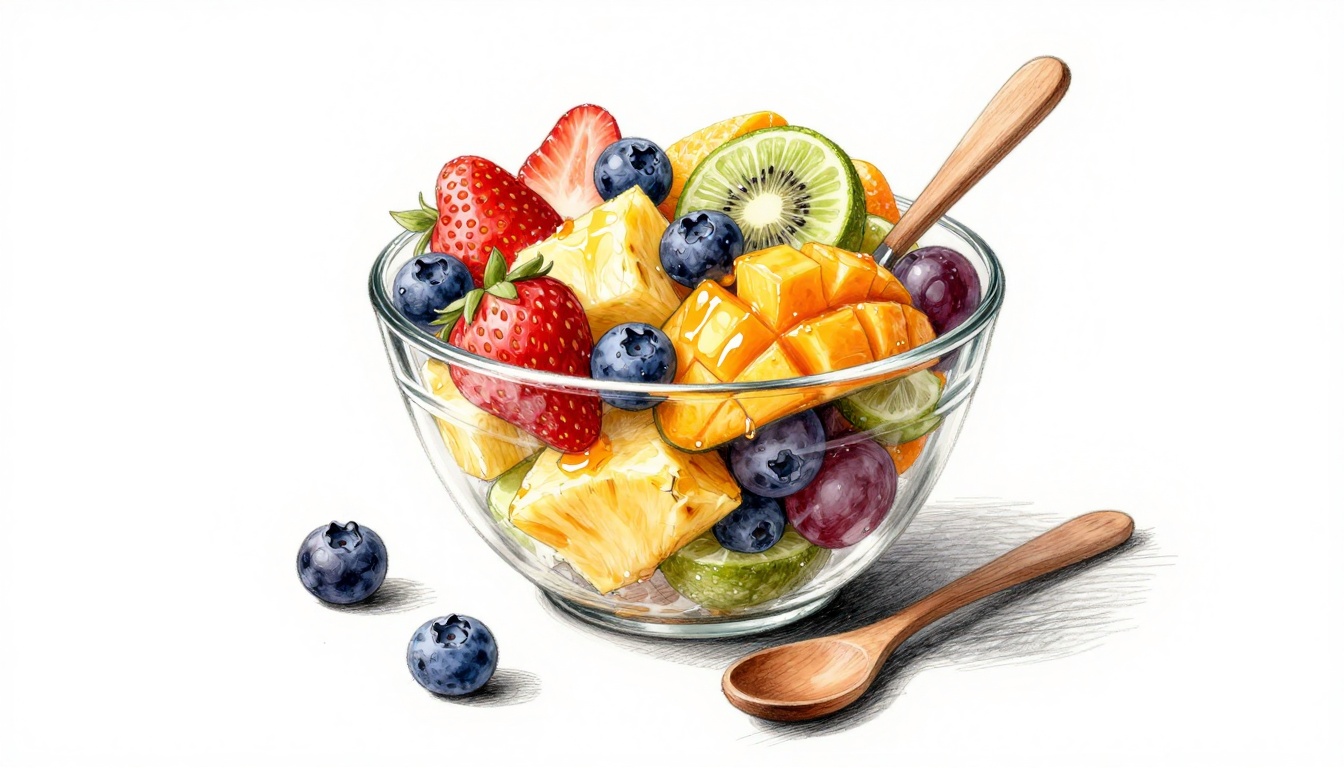
A bowl of ripe summer fruit makes an easy, refreshing addition to breakfast, brunch, a picnic, or a barbecue. This summer fruit salad combines strawberries, blueberries, pineapple, mango, grapes, kiwi, and orange with a simple honey-lime dressing.
The recipe takes only a few minutes to prepare, and you can change the fruit to match what looks best at the market. Honey adds a touch of sweetness, while fresh lime juice and zest brighten every bite.
Why This Fruit Salad Tastes So Fresh
A good fruit salad balances different flavors and textures. Strawberries bring sweetness and color, blueberries add juicy bursts, and grapes give each bite a crisp snap. Pineapple and kiwi add tartness, while mango brings a rich, soft sweetness.
The honey-lime dressing ties the fruit together without covering its natural flavor. Honey rounds out the citrus, and lime juice keeps the sweeter fruit tasting bright. A little lime zest adds extra aroma.
Choose fruit that is ripe but still firm enough to hold its shape. Very soft peaches, bananas, and raspberries can break down quickly once they are cut and dressed.
Best Fruits for Summer Fruit Salad
This recipe uses strawberries, blueberries, grapes, mango, kiwi, pineapple, and orange, but you can adjust the combination to suit the season. Watermelon, peaches, nectarines, raspberries, blackberries, cantaloupe, and honeydew all work well.
For the best balance, combine sweet fruit with a few tart or juicy choices. Mango, grapes, strawberries, and ripe peaches are naturally sweet. Kiwi, pineapple, oranges, and berries bring more acidity.
Crisp apples are another option. Cut them shortly before serving and toss them with a little of the lime dressing to keep their flavor fresh. Add bananas just before serving, since they soften and brown faster than most other fruit.
Honey-Lime Dressing
You will need:
- 2 tablespoons honey
- 2 tablespoons fresh lime juice
- 1 teaspoon finely grated lime zest
- ½ teaspoon vanilla extract, optional
Whisk the honey, lime juice, lime zest, and vanilla, if using, in a small bowl until smooth. If the honey is thick, let it come to room temperature first.
Taste the dressing before adding it to the fruit. Use a little more lime juice if the fruit is very sweet, or add a touch more honey if the fruit tastes especially tart. The dressing should taste bright and balanced on its own.
Fresh lime juice gives the dressing a cleaner flavor than bottled juice, and the zest adds fragrant citrus oils. Zest the lime before cutting and juicing it, and avoid the bitter white pith beneath the peel.
How to Make Fresh Summer Fruit Salad
- Wash and dry the fruit. Rinse fresh produce under running water and dry it well with a clean towel. The FDA advises against washing produce with soap, detergent, or commercial produce washes.
- Cut the fruit. Halve or quarter the strawberries, depending on their size. Cut the mango and pineapple into bite-sized pieces, halve large grapes, slice the kiwi, and separate the orange into manageable pieces. Leave the blueberries whole.
- Mix the dressing. Whisk the honey, lime juice, zest, and optional vanilla in a small bowl. Taste and adjust the sweetness or acidity as needed.
- Combine gently. Place the fruit in a large bowl and pour the dressing over it a little at a time. You may not need all of it. Fold gently with a large spoon or spatula so the softer fruit stays intact.
- Chill before serving. Refrigerate the salad for 15 to 30 minutes to let the flavors mingle while the fruit stays fresh and firm.
Aim for bite-sized pieces that are easy to eat with a fork. Drying the fruit after washing also helps prevent excess water from thinning the dressing.
When to Add the Dressing
For the freshest texture, combine the fruit and dressing shortly before serving. If you are preparing the salad ahead, keep them in separate covered containers in the refrigerator, then toss them together closer to mealtime.
For a casual meal, dressing the fruit 15 to 30 minutes before serving gives the flavors time to come together without leaving the fruit in citrus juice for too long.
How to Keep Fruit Salad Fresh
Store cut fruit in a covered container in the refrigerator. USDA guidance recommends refrigerating cut fruit and not leaving it at room temperature for more than two hours.
For the best texture, enjoy the salad soon after making it. If you expect leftovers, keep bananas and other delicate fruit separate and add them to individual portions as needed.
To prevent a watery fruit salad, dry the fruit thoroughly and use only enough dressing to coat it lightly. Watermelon and melon release plenty of liquid, so add them shortly before serving or offer them in a separate bowl.
Easy Variations
Use fruit that is ripe and in season. Swap strawberries for raspberries or blackberries, or replace mango with peaches or nectarines. If you do not have blueberries, grapes add a similar burst of sweetness.
For a tropical version, combine mango, pineapple, papaya, kiwi, and orange. Add a little passion fruit pulp for a tart, fragrant finish, or sprinkle toasted unsweetened coconut over the salad just before serving.
For a berry-focused salad, mix strawberries, blueberries, raspberries, and blackberries with orange segments or kiwi. Fresh mint also pairs well with berries, pineapple, and watermelon. Use just a small amount so its flavor does not overpower the fruit.
How to Serve Honey-Lime Fruit Salad
Serve the salad with pancakes, waffles, French toast, or yogurt for breakfast. It also makes a colorful side for brunch, grilled chicken, grilled fish, sandwiches, and barbecue dishes.
For dessert, spoon chilled fruit into small glasses and garnish with mint. A little plain Greek yogurt makes each serving more substantial, while toasted coconut adds crunch.
A clear glass bowl shows off the fruit’s colors. Keep the presentation simple and let the fresh fruit do the work.
Make-Ahead Tips for Gatherings
Wash and dry the fruit earlier in the day, and prepare the dressing separately. Keep both refrigerated, then cut delicate fruit and combine everything closer to serving time.
At an outdoor gathering, serve smaller portions and refill the bowl from a chilled container. If you are transporting the salad, pack it in an insulated cooler with cold packs and add the dressing just before serving when possible.
USDA guidance recommends refrigerating cut produce and limiting the time it sits at room temperature. When the temperature is above 90°F (32°C), perishable food should be left out for no longer than one hour.
Common Fruit Salad Mistakes to Avoid
Choosing too many fruits can make the flavors hard to distinguish. Six to eight varieties are usually enough for a colorful, balanced bowl.
Underripe fruit will stay underripe, even with a sweet dressing. Taste the fruit first, then choose a combination that already has good flavor.
Cutting everything too far in advance can also affect the texture, especially with berries, bananas, and other soft fruit. Prepare firmer fruit ahead and save delicate varieties for later.
Start with about half the dressing, toss gently, and add more only if needed. A light coating is enough to bring the flavors together.
Wash produce under running water before preparing it, even if you plan to peel it. Use clean hands, utensils, cutting boards, and work surfaces.
Conclusion
Fresh summer fruit salad with honey-lime dressing is easy to make and simple to adapt. Ripe fruit brings the color and flavor, while honey, lime juice, and zest add just enough sweetness and brightness.
Dry the fruit well, choose a mix of sweet and tart varieties, and add the dressing shortly before serving. You will have a fresh, colorful dish for breakfast, a summer gathering, or a light dessert.
Frequently Asked Questions
Can I make fruit salad the night before?
You can prepare the fruit and dressing ahead, but store them separately in covered containers in the refrigerator. Combine them closer to serving time, and add bananas or very soft berries at the last minute.
What fruit goes best with honey-lime dressing?
Strawberries, blueberries, pineapple, mango, grapes, kiwi, oranges, watermelon, peaches, and melon all pair well with honey and lime. A mix of sweet and tart fruit gives the salad the best balance.
How do I keep fruit salad from getting watery?
Dry the fruit thoroughly after washing, use a light coating of dressing, and add watermelon or melon just before serving. If you are preparing the salad in advance, keep the dressing separate until mealtime.
Can I use bottled lime juice?
Yes, but fresh lime juice has a brighter flavor, and fresh zest adds a citrus aroma that bottled juice cannot provide. Since the dressing has only a few ingredients, fresh lime makes a noticeable difference.
How long does homemade fruit salad last in the refrigerator?
For the best flavor and texture, serve the salad soon after preparing it. Store leftovers in a covered container in the refrigerator, and follow food-safety guidance for cut produce. USDA guidance recommends keeping cut fruit refrigerated and not leaving it at room temperature for more than two hours.

Food writer and passionate home cook dedicated to creating easy, delicious recipes, quick weeknight meal ideas, and practical kitchen tips. Focused on helping everyday cooks recreate wholesome, flavorful dishes at home with simple ingredients and clear, step-by-step guides.